


Filters
Available Artwork
Showing 1–24 of 39 results
-
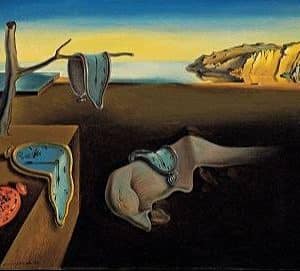
The persistence of memory
Gesso on Canvas
21 W x 22 H Inch
$3,640
Portrait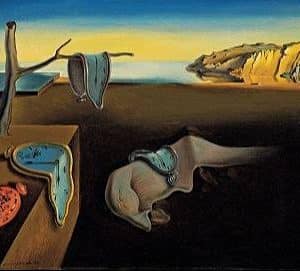
The persistence of memory
Charcol on Canvas
20 W x 22 H Inch
$3,640
Portrait
D>=38 and <60 Tube
Acrylic on Fabric
55 W x 36 H Inch
$440
Acrylic
test
Acrylic on Fabric
40 W x 254 H Inch
$60
Acrylic
tesst
Acrylic on Fabric
254 W x 80 H Inch
$3,080
Acrylic
test
Acrylic on Glass
177.6 W x 80 H Inch
$4,620
Acrylic
fd
Acrylic on Canvas
50 W x 25 H Inch
$60
Acrylic
test
Acrylic on Fabric
2 W x 22 H Inch
$30,770
Acrylic
fefe
Acrylic on Glass
40 W x 20 H Inch
$80
Acrylic
test
Acrylic on Fabric
1.2 W x 1.2 H Inch
$80
Acrylic
Laptop
Acrylic on Hardboard
20 W x 10 H Inch
$90
Acrylic
Laptop
Acrylic on Glass
26.4 W x 13.2 H Inch
$80
Acrylic
Laptop
Acrylic on Fabric
22 W x 12 H Inch
$80
Acrylic
gr
Acrylic on Fabric
80 W x 40 H Inch
$80
Acrylic
ART – 3
Acrylic on Fabric
200 W x 100 H Inch
$4,620
Acrylic
ART-2
Acrylic on Canvas
100 W x 50 H Inch
$80
Acrylic
ART-1
Acrylic on Glass
20 W x 10 H Inch
$3,080
Acrylic
elisium.xportsoft-folio
Acrylic on Canvas
1 W x 1 H Inch
$7,700
Acrylic
elisium.xportsoft-folio
Acrylic on Canvas
1 W x 1 H Inch
$7,700
Acrylic
wp-admin
Acrylic on Canvas
1 W x 1 H Inch
$7,700
AcrylicOther styles of paintings you may like
Origins of Cubism Painting:
One of the most influential avant-garde art movements, Cubism originated in the early 20th century, following the creation of Pablo Picasso’s famous painting “Les Demoiselles d'Avignon” in 1907 and Georges Braque's work in Paris. The movement was then joined by French art critic Louis Vauxcelles, who coined the term "Cubism" after seeing the landscapes Braque had painted in 1908 at L’Estaque in emulation of Paul Cézanne. Cézanne's late works, which represented three-dimensional forms, are considered one of the primary influences that led to Cubism.
Cubism highly influenced and revolutionised the visual art styles; in fact, Vaucelles called the geometric forms in the highly abstracted works "cubes". Cubism paintings by Picasso, such as "Les Demoiselles d'Avignon," drew inspiration from African art through style and distortion. Also, the term cubism is broadly associated with various artworks produced in Paris during the 1910s and throughout the 1920s. Moreover, the Cubist painters rejected the concept of being influenced by nature or that artists should adopt traditional techniques, such as perspective, modelling, and foreshortening, to create art. Instead, they wanted to emphasise the two-dimensionality of the canvas. The Cubist artists depict the subject from multiple perspectives in order to represent the subject in a broader context. Cubist subjects are split up, analysed, and reassembled in an abstract form to give not just a single but multiple perspectives to the art.
Cubism's history is often divided into phases by scholars. Juan Gris, a Spanish painter, named the initial period of Analytic Cubism (1910-1912) a brief yet highly influential and radical art movement. This was followed by Synthetic Cubism (1912-1914), which featured simpler forms, more vibrant colours, and textural and patterned experimentation, such as the use of newspaper print and patterned paper. Art historian Douglas Cooper proposed an alternative three-phase structure in his book, The Cubist Epoch: "Early Cubism" (1906-1908), marking the movement's inception in Picasso and Braque's studios; "High Cubism" (1909-1914), during which Juan Gris became a significant figure after 1911; and finally, "Late Cubism" (1914-1921), which Cooper considered the final stage of Cubism as a radical avant-garde. Cooper's specific application of these terms primarily focused on the works of Braque, Picasso, Gris (post-1911), and, to a lesser extent, Léger, suggesting a deliberate value assessment. Moreover, some of the leading cubism artists are Albert Gleizes, Jean Metzinger, and Fernand Léger.
Cubism revolutionised the world of art by breaking away from traditional perspectives and embracing abstraction, geometry, and multiple viewpoints. Its legacy lives on not only in modern painting but also in architecture, design, and digital art—reminding us that innovation often begins with a bold shift in perspective.
Cubism Painting FAQs: Your Essential Guide
How has the market for Cubism artwork evolved?What is the investment outlook for Cubism artwork in today's market?What makes Synthetic Cubism particularly attractive to collectors compared to its earlier phase?How can the longevity and value of Cubist art be ensured through proper care?Where are the most reliable channels for acquiring significant Cubism paintings?What materials and finishes are best for a Cubist painting frame?Let us inspire you
 Want to receive exciting art and lifestyle content, directly to your box?